If you’re on Instagram as much as we are, then chances are you’ve noticed that floral arrangements are getting more and more elaborate. They’re more sculpture than bouquet…at least the cool ones are. So, you know us, we had to do a deep dive on what exactly goes into making them, and the real question—how much does one [or a wedding full] of these masterpieces cost? We had the absolute pleasure of working with Michelle Lane of Something’s Blooming for our November editorial, and she is one of the innovators behind this growing trend. Here’s what she had to say…
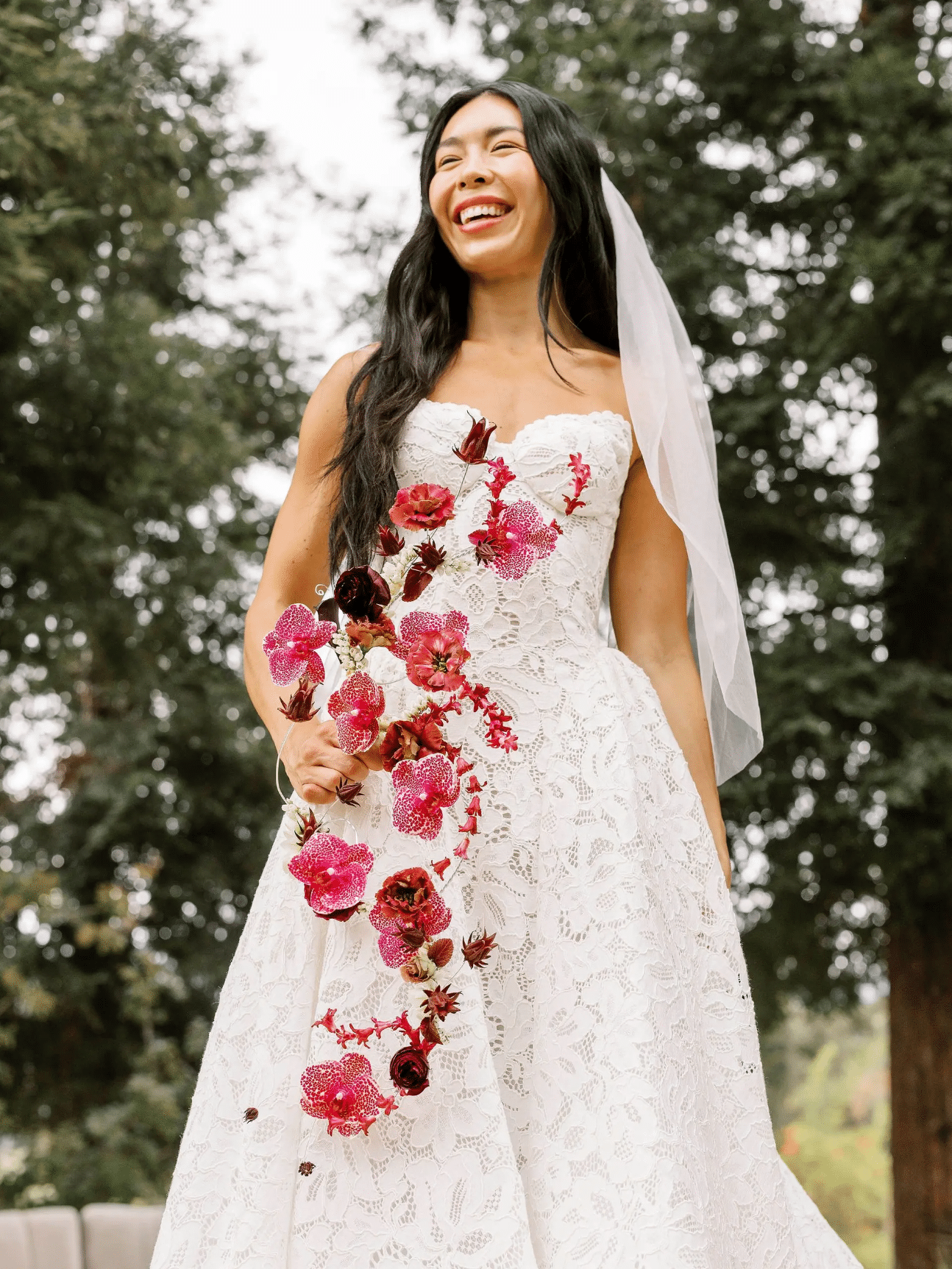
Bouquets vs centerpieces and everything in between, which arrangements lend themselves to a wired design?
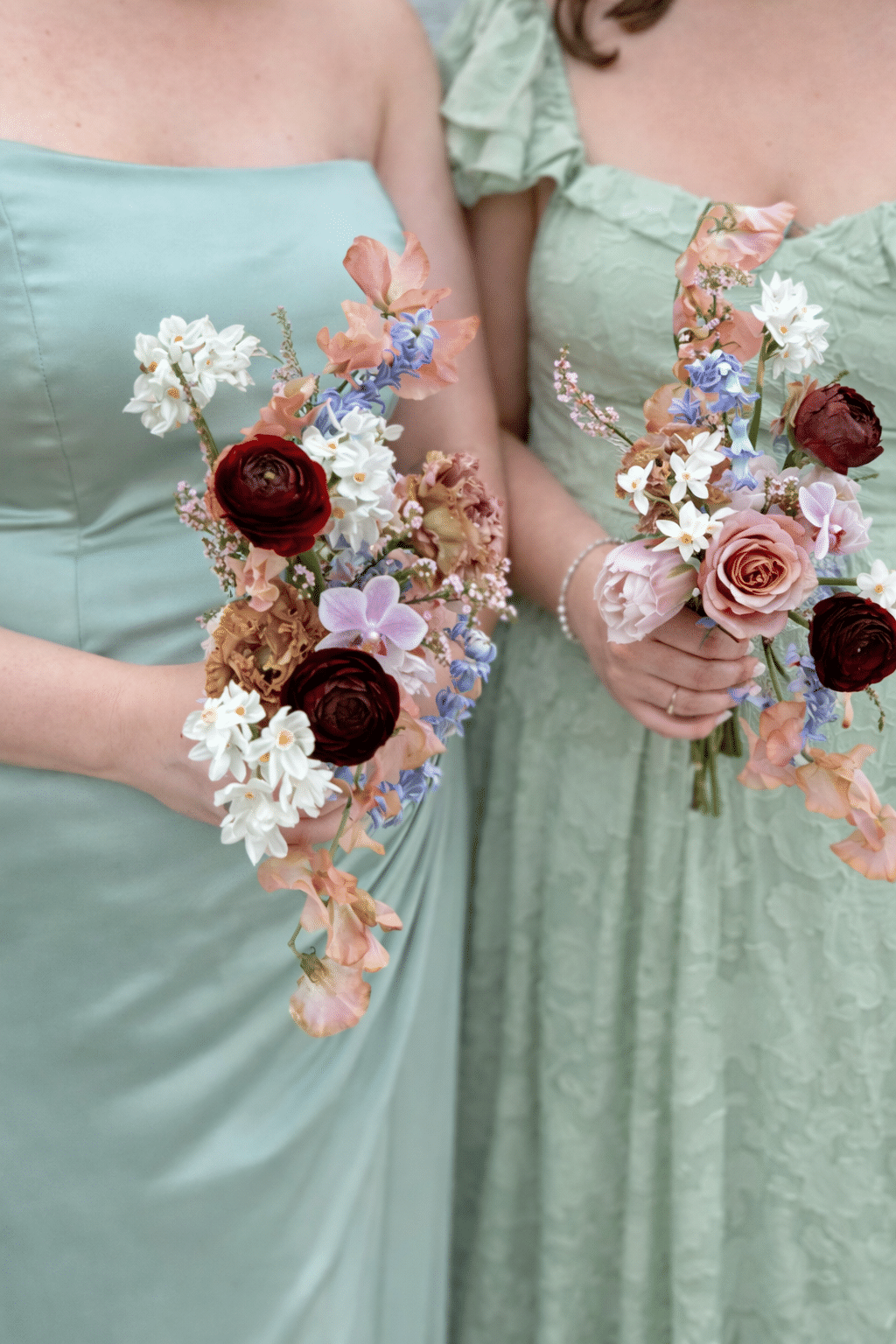
So many! I actually started with wearable designs, creating alternatives to traditional boutonnieres and corsages. My background in jewelry design also shaped how I approached flowers as something you could wear, thinking about their placement, shape, and movement on the body.
When my wife and I were planning our own wedding in 2019–2020, I saw firsthand how often wedding flowers were presented through gendered norms. I wanted more options for queer couples, trans and nonbinary people, and anyone who didn’t see their personal style reflected in those choices. Even within a two-bride or two-groom couple, each person can have a completely different relationship with flowers and how they want to wear or carry them.
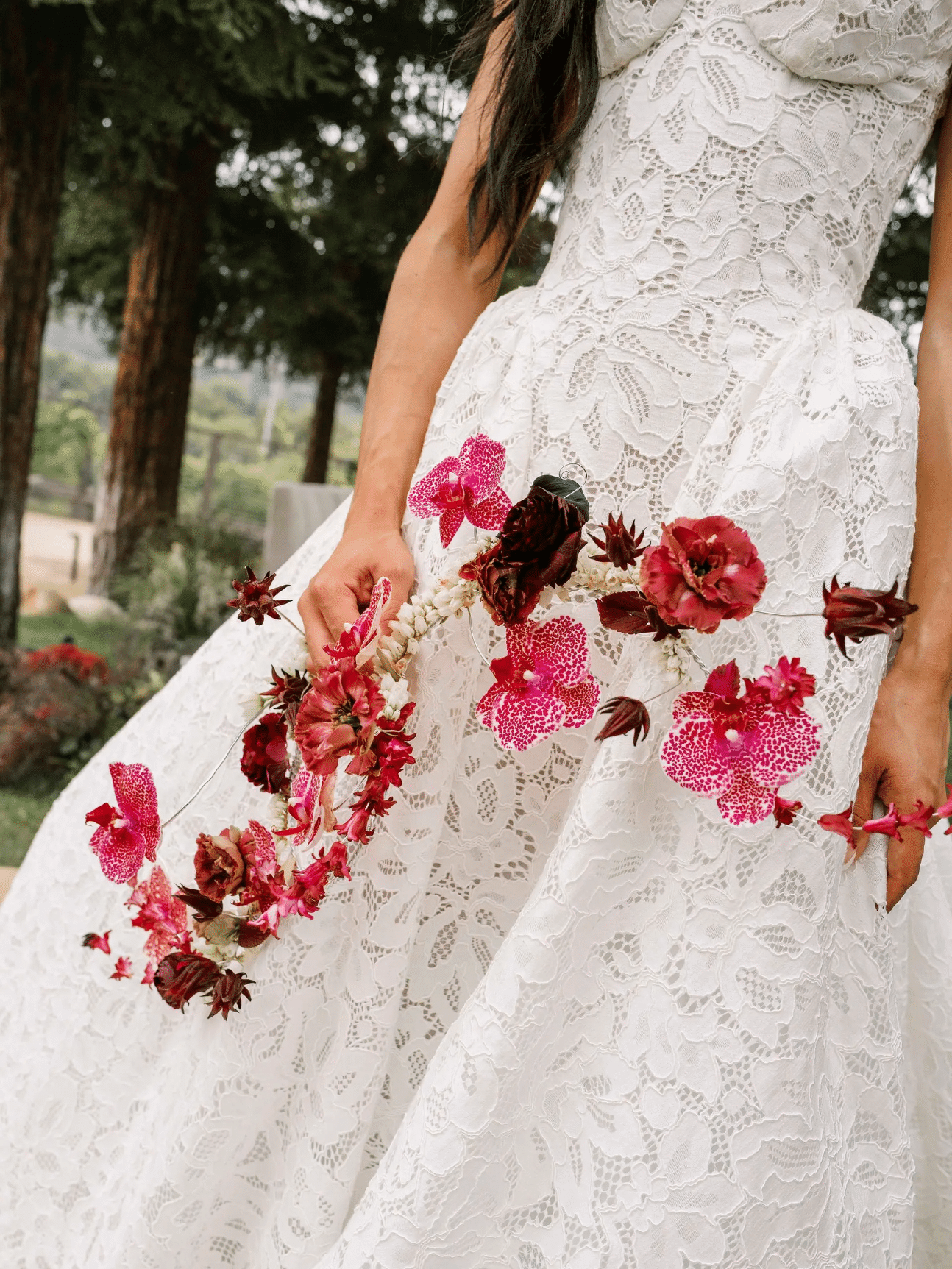
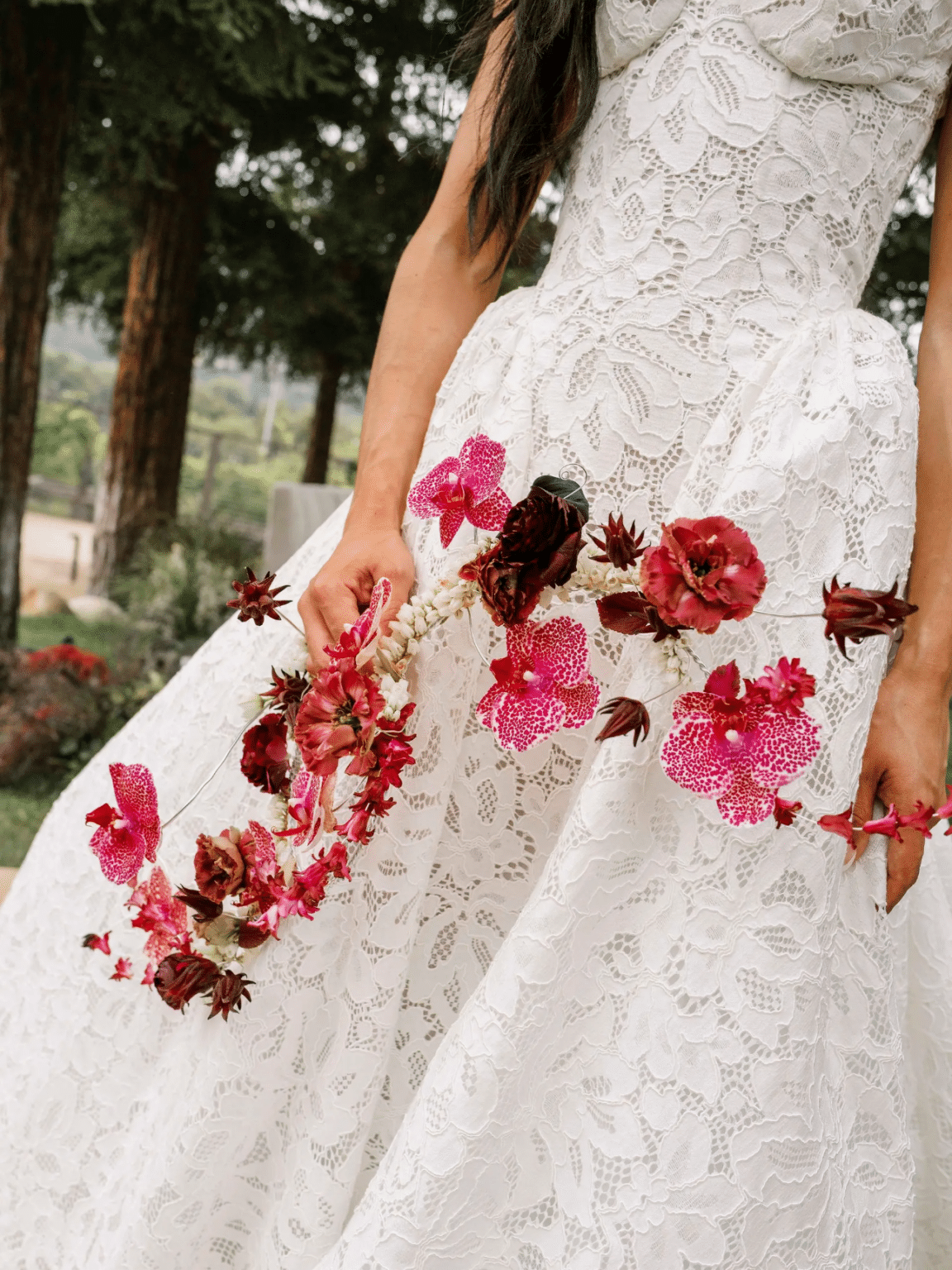
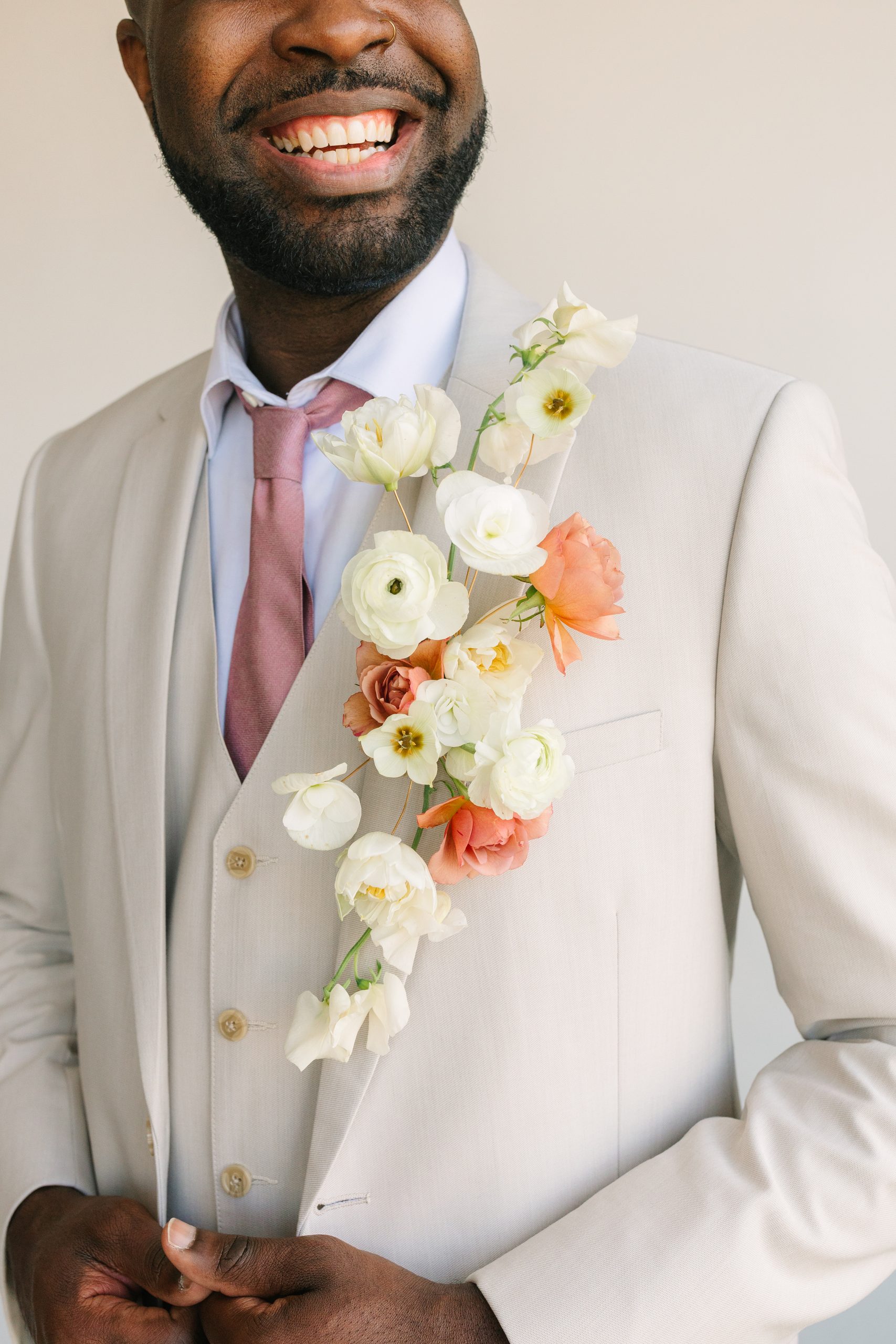
That led me to create what I became known for: my signature lapel pieces. I also made corsages with flowers that float off the wrist and flower crowns with blooms that appear to levitate above the head. Wire allows me to create the negative space I love between the flowers and the person wearing them, giving each design movement, shape, and an unexpected silhouette.
From there, I started exploring larger designs: floating orchids suspended above a mandap, wired orchids emerging from garden-style aisle arrangements, and eventually bouquets. My first wired bouquet was a hybrid design for a wedding I donated my services to through Wish Upon a Wedding, a cause I support annually to help couples facing terminal illness or life-altering health circumstances celebrate their marriage. It combined natural foliage stems with individually wired orchids.
The bouquet I designed and created for Wedding Chicks explores that same freedom of artistry through shape and movement. I’ve also created smaller wired wedding party bouquets using this same armature, as well as more intricate designs like cascading strung-orchid bouquets, arch designs that incorporate wired flowers, cascading calla lily and tulip installations, and centerpieces, too!
For me, the fun is in what you can create when a flower no longer has to be connected to its stem! Flowers can appear to float, dance, or spring out of unexpected places. I’m always looking for ways to innovate and reimagine traditional designs, and working with wire gives me so much freedom to play.
Are there certain flowers that work better in a wired arrangement than others?
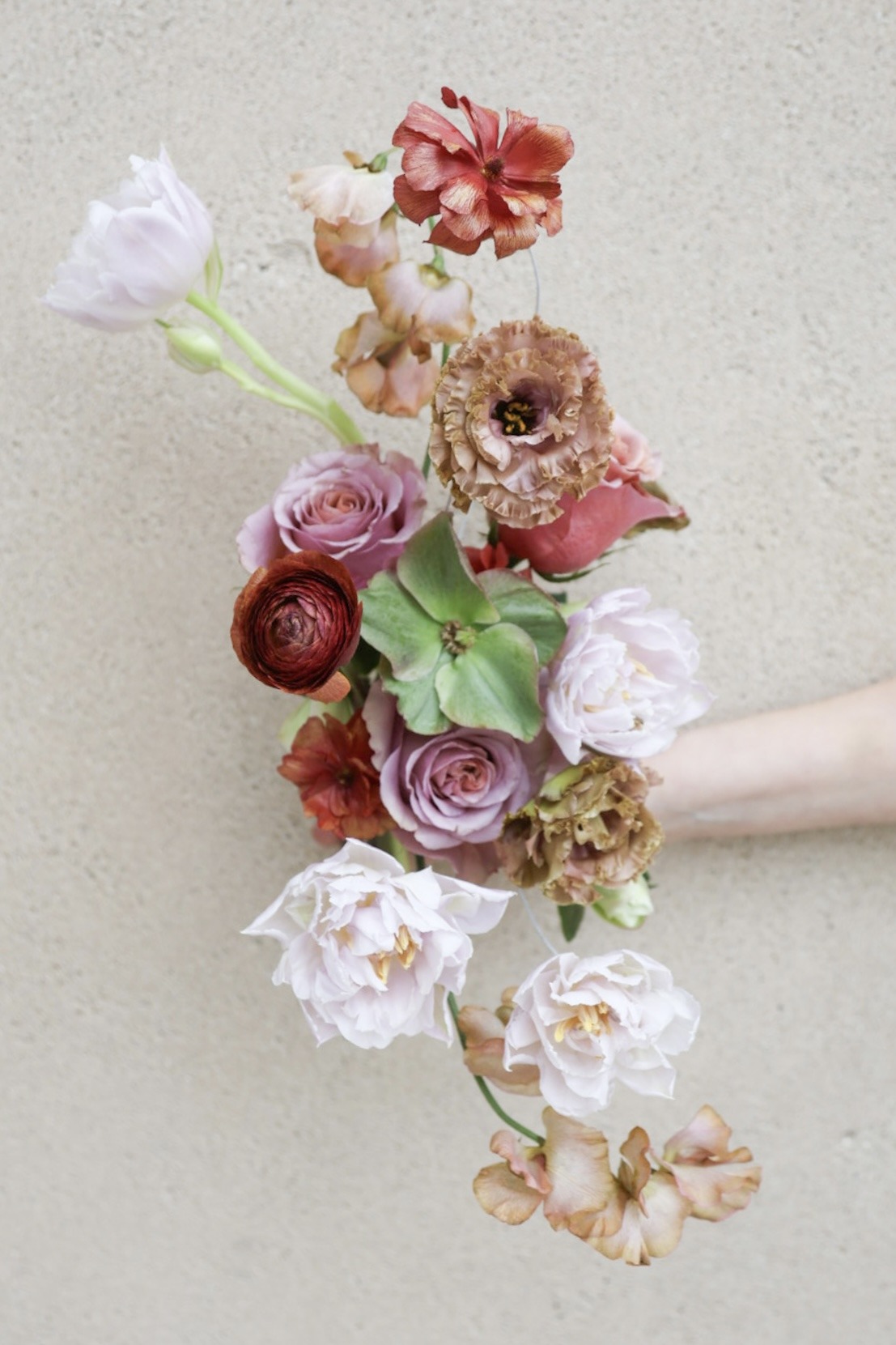
Oh, absolutely. I work with a tried-and-tested selection of flowers that hold up well without a direct water source. For wedding-day wearables and bouquets, I look for materials that can reliably last at least seven hours under the anticipated conditions.
I thoroughly hydrate the flowers before working with them and condition the finished designs in a hydration chamber to help them retain moisture. Flower selection also depends on where and when the design will be used. Here in Southern California, I have to be especially mindful of heat and prolonged direct sun.
So, if you have your heart set on one of these unique arrangements, trust your florist to recommend which flowers are safe to choose from and be flexible. When you’re searching for inspiration, fall for a color palette instead of the flowers themselves.
Are wired designs more or less expensive than a traditional bouquet, assuming the same types of florals?
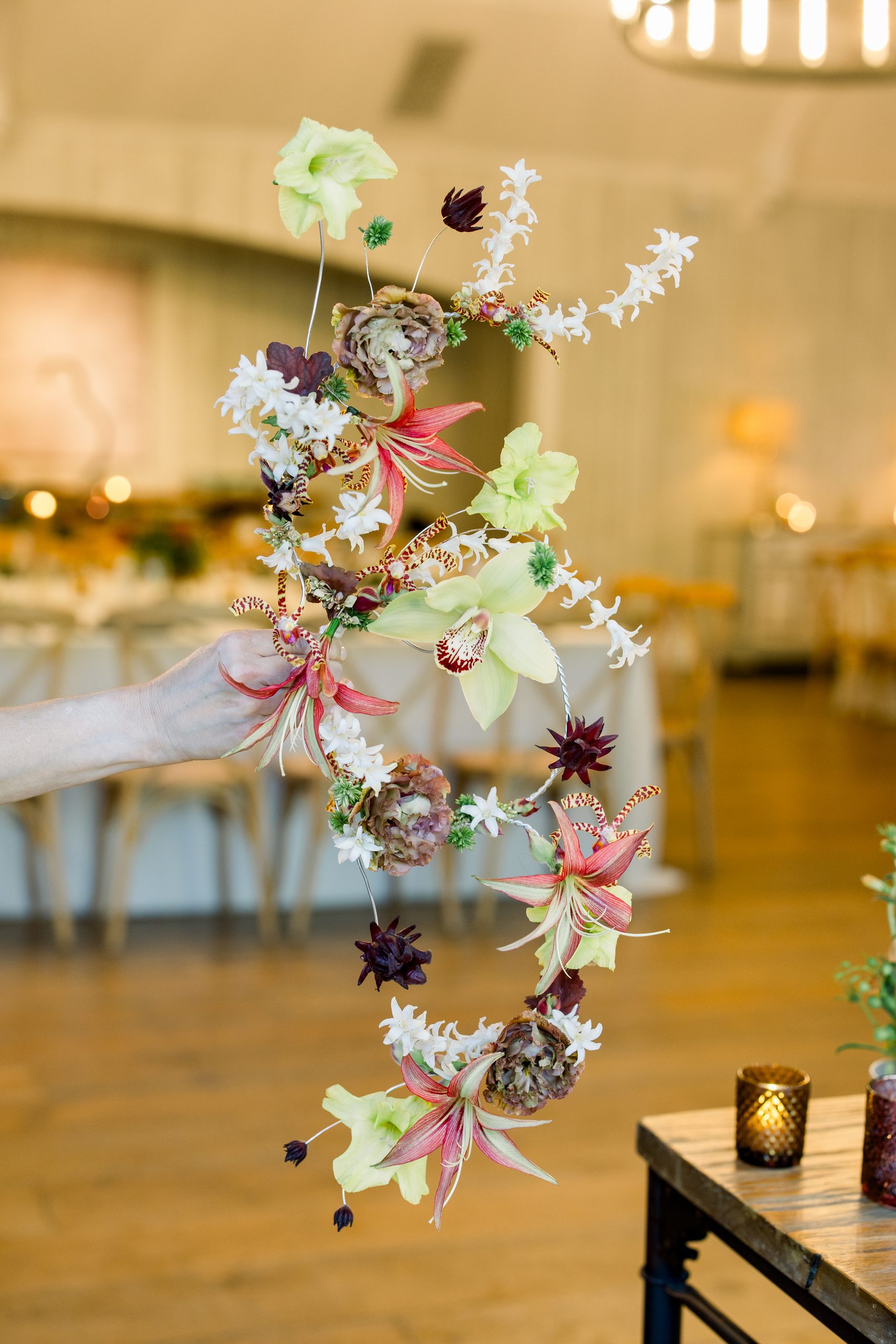
Wired designs are more expensive because of the amount of prep and design time involved, as well as the level of artistry and experience required to make pieces like these. I’m creating the armature (the wire framework), preparing and placing individual flowers, and shaping the design in a way that requires considerably more work than a traditional spiral bouquet. Even with the same flower varieties, the construction is very different, as is the time spent on each bouquet.
Makes sense, but good to keep in mind when you’re planning your floral budget!
Have you or one of your clients ever had a wired arrangement preserved?
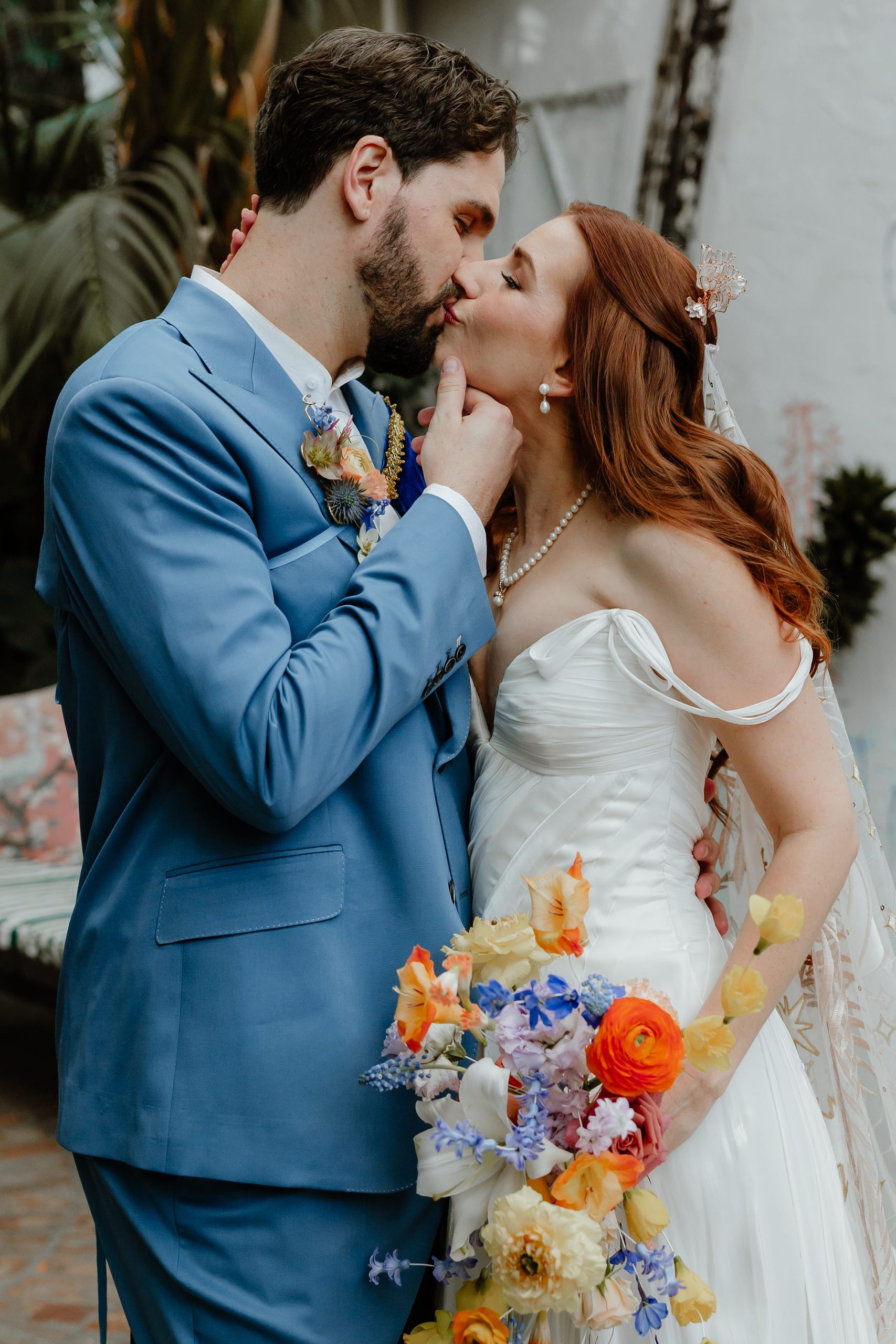
Not yet, but I would love to see that! The wire structure is part of the design itself, so I’d be especially interested in how a preservation artist might retain that shape and sense of movement.
You know what that means! Now you have to get your wired arrangement preserved and send us the pics! Please and thank you!
To see even more of their work, follow them @somethingsbloomingla on IG.
Continue to next story